

WHY ARMORED VEHICLES ARE NOT ALL CREATED EQUAL: THE THREE TIERS OF BALLISTIC PROTECTION
Updated: Feb 24
In the global defense and security market, the term armored vehicles covers a vast spectrum of engineering quality. For procurement officers and private security firms, the challenge is balancing the operational budget with the necessity of survival. The industry is currently divided into three distinct tiers of manufacturing. Understanding the technical delta between Commercial-Grade Armor, Laboratory-Validated Platforms, and Pedigree-Engineered Platforms is essential for selecting the right vehicle for your specific mission profile.
Tier 1: The Sub-standard Protection, BALLISTIC PROTECTION
At the bottom of the market are companies that treat armoring as a simple fabrication task. These manufacturers often use certified steel and glass but lack the engineering pedigree to integrate them safely.
A critical failure in this tier is the neglect of Heat Affected Zones (HAZ). When ballistic steel is welded incorrectly, the molecular structure changes, creating soft spots that a high-velocity projectile can penetrate with ease. Furthermore, these builds often lack proper Ballistic Overlaps. Even if the door panel is strong, a lack of engineered overlaps at the pillars and hinges creates ballistic gaps where splatter or direct rounds can enter the cabin.
Beyond the steel, these builds ignore the fundamental design structure. They lack the engineering required to handle the physics of an attack or a high-speed crash. Without a reinforced structural frame, the armor can actually become a secondary projectile during an impact. Additionally, these vehicles often lack necessary mechanical upgrades. Bolting heavy armor onto a civilian chassis without upgrading the brakes, suspension, and axles creates a vehicle that is mechanically dangerous and prone to failure during tactical maneuvers.
Tier 2: The Certified Protection
The opposite extreme consists of vehicles that have undergone third-party destructive testing at independent laboratories such as Beschussamt or HP White. Platforms like the TLC 300 or SAIF ST-III fall into this category when a mission requires verified proof of performance.
The Certification Process:
STANAG 4569: The NATO standard for Armored Personnel Carriers (APC) and MRAP units, testing both kinetic impact and under-vehicle blast resistance.
VPAM / CEN: Standards focused on ballistic resistance for civilian and law enforcement profiles.
Certification requires the physical destruction of a test unit to prove the Structural Armored Monocoque and V-Hull Geometry can handle the violent energy of an IED or multi-hit ballistic engagement. While this is the highest level of verified assurance for high-intensity combat zones, the process involves a massive "Certification Tax" and long lead times that may not suit every operational budget.

Tier 3: The Engineered Protection
This is where experienced manufacturers provide the most significant value. Pedigree-Engineered Platforms (PEP)may not carry an individual STANAG certificate for every specific model, but they are built using the exact same verified engineering data and manufacturing DNA as certified vehicles.
When a company has successfully certified vehicles like the SAIF ST-III in the past, that expert knowledge is baked in to every other vehicle they produce.
The Benefit of Experience: We apply the same welding protocols, ballistic overlap designs, and material stress analysis used in our laboratory-tested platforms to our more affordable builds.
Structural Integrity: These vehicles are designed to handle the dynamics of a crash or an attack, ensuring the armor remains a protective shell rather than a liability.
Tactical Mechanical Upgrades: Every PEP unit includes heavy-duty brakes and suspension systems specifically engineered to manage the increased weight, ensuring the vehicle performs under pressure.
Price vs. Performance: This tier is the most advantageous for clients who trust a manufacturer’s pedigree. You receive a professional-grade survival cell designed by the same engineers who pass STANAG tests, providing elite protection at a more accessible price point.
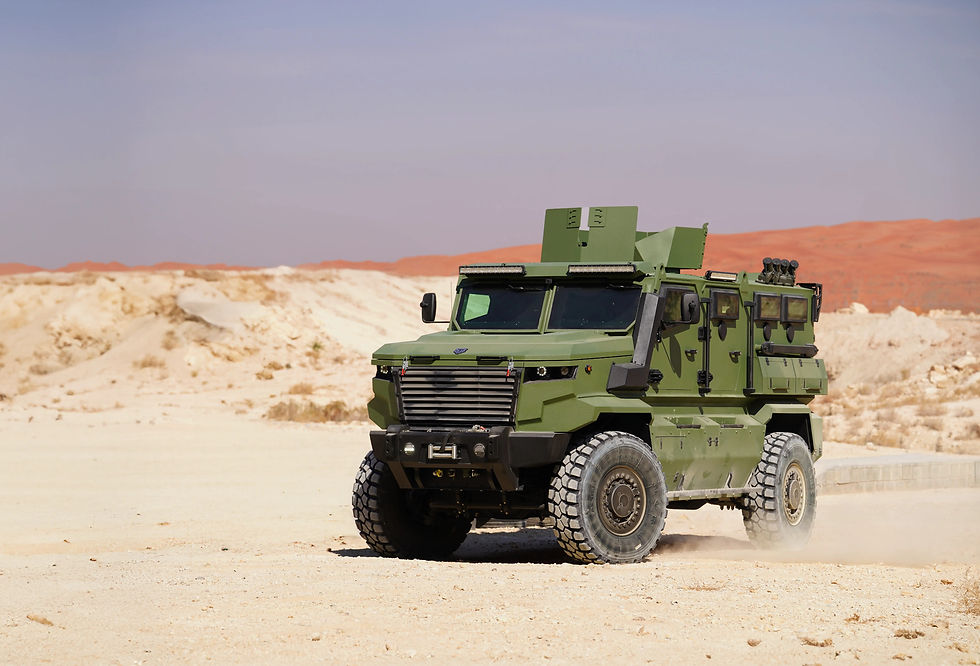
Blast Attenuation: Survival Beyond the Steel
A critical differentiator between these tiers is how the vehicle handles the G-load of an explosion. In sub-standard builds, a blast often causes the floor to shatter or internal components to become lethal projectiles.
Pedigree-Engineered and Laboratory-Validated vehicles prioritize the integration of Blast Attenuating Seats. These systems are designed to dampen the upward acceleration of an IED, protecting the occupant’s spine and lower limbs. Whether the vehicle is fully certified or built using pedigree-certified engineering principles, the presence of these safety systems is a hallmark of a professional manufacturer who understands the physics of survival.

Strategic Procurement: Which Tier Fits Your Mission?
Choosing between these levels of protection is a matter of risk assessment and budget optimization.
Select Laboratory-Validated Platforms when the mission profile involves high-probability IED threats or government mandates that require third-party laboratory validation.
Select Pedigree-Engineered Platforms when you require the ballistic integrity of a certified manufacturer but need to optimize your fleet budget. This tier offers the best balance of safety and value, leveraging the "known-good" engineering of a proven house.
Avoid Commercial-Grade Armor regardless of the price point, as the lack of HAZ control, mechanical upgrades, and structural overlaps creates a false sense of security that fails when it matters most.
Strategic Assessment: Trust the Engineering Pedigree
In the world of armored vehicles, the most important asset is the engineering team behind the curtain. The pedigree of a manufacturer is not merely a marketing term but a technical insurance policy that ensures every weld and overlap is designed to a professional standard. By choosing a manufacturer with a documented history of certification, you ensure that even your non certified fleet is built to a standard that has been battle tested and laboratory proven. This is because the elite engineering protocols required to pass STANAG or VPAM testing are applied to every vehicle on the production line, creating a high performance survival cell regardless of whether an individual certificate is present.
When you invest in a Pedigree Engineered Platform, you are buying into a system that accounts for the violent physics of a high speed crash or a kinetic attack. Unlike basic up armoring, these platforms undergo a rigorous design phase where the design structure is optimized to handle the extreme weight of the armor while maintaining tactical agility. This includes the mandatory integration of heavy duty brakes and reinforced suspension systems that can survive the stress of evasive maneuvers. Investing in this level of engineering pedigree is an exercise in risk mitigation for procurement officers who must balance fleet budgets with the absolute necessity of crew survivability. At the end of the day, true protection is not just about the certificate but about the Engineering of Survival.


Comments